

Stamp of Authority
Stamp of Authority
__25L2944Q2w.jpg)
The major problems associated with this traditional type of marking product include:
-
Time involved with hard stamping and paperwork.
-
Potential damage it causes
-
Hard to read markings
-
A lack of control over font sizes and sharp-edge fronts
__25L2927qjC.jpg)
RFID and SaaS: Ushering in a New Era of Equipment Safety
There is also a large volume of equipment in industry that is marked with colour-coded tie-wraps that give a visible indication that the item is within its six-monthly examination period. However, that doesn’t mean that the item has been given its pre-use inspection.
The wider problems associated with stamping and tagging begin to emerge, meaning that a wholesale move towards radio frequency identification (RFID) and Software as a Service (SaaS) can’t come soon enough — with pre-use checks, unique identification numbers, and the Machinery Regulation all at the fore of the revolution led by YOKE Industrial Corp.
fully digitalise our complete range
To back-up that claim, YOKE had a decision to make a few years ago.
We could have taken one or two RFID-equipped products and introduced them to industry to assess potential uptake,
or fully digitalise our complete range, where size permitted, and state our intentions to change the way the industry works tomorrow.
We chose the second option — and have never looked back.
Aligned with a mission to manufacture quality rigging and safety equipment to deliver superior safety protection,
RFID drastically enhances safety and helps industry keep up with pre-use checks, unique identification numbers, and the move towards January 2027, when everybody is expected to be working to the Machinery Regulation.
That's when the EU Machinery Regulation fully applies, and the Machinery Directive 2006/42/EC is repealed. Eventually, the Machinery Regulation will eliminate all the different requirements across all of the EU member states, so they all follow the same regulation.
What are the chips and how do they work?
RFID has been used for many years in industries such as agriculture, where cattle are tagged, for example, but it was always difficult to incorporate it into rigging due to complexities of manufacture and ensuring suitability for items where they can last decades if used properly.
With the additional work YOKE has carried out with Near Field Communication (NFC) technology, it means that today every user with a mobile phone capable of paying a bill now also has the ability to at least check a component for a safe use instruction.
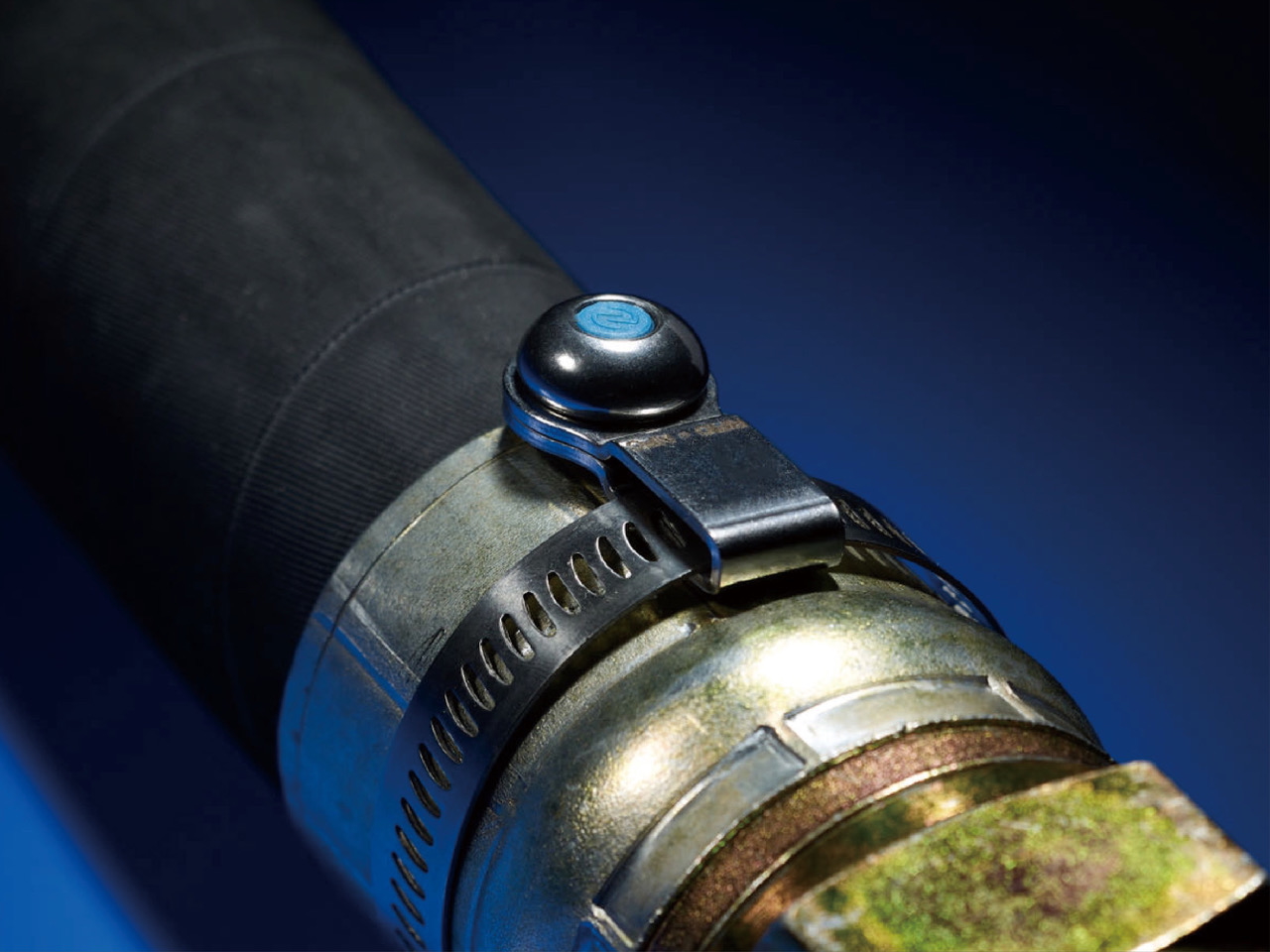
BlueSupra & SupraNano: Durable RFID Solutions for Every YOKE Product
Already, several original equipment manufacturers (OEMs) are using BlueSupra. Put simply, BlueSupra is the brand name for the range of tags we produce and SupraNano is the encased NFC RFID chip. For YOKE products, we pressure-fit the SupraNano directly into the steel, but for items such as a snatch block, we utilise a retrofit tag to permanently attach it.
The equipment is extremely durable. Our BlueSupra retrofit tags are put through a series of tests covering impact and wear and the SupraNano is subjected to rigorous temperature (-30 / +125 degrees C) and water ingress (6,000m subsea) tests.
Effortless Traceability: YOKE Leads the Shift from Manual Marks to Digital IDs
We frequently point people to LEEA's guidance that where a duty holder has many items of a similar generic form of lifting equipment, it is considered best practice to give each piece its own unique identification number, which is then recorded on each thorough examination report, thus ensuring the report is traceable to the equipment without ambiguity.
All this can be achieved with RFID and SaaS — without hard stamping or colour-coded tie-wraps. Hard stamping is not a favourable way to identify equipment; it can bring inherent damage, and logistical and inspection issues thereafter. Each inspector will inspect hundreds of thousands of items in their lifetime, cleaning off dirt and mud, just to be able to read the hard stamp. This can lead to mistakes as numbers and letters are not always readable.
Most inspection companies have transitioned away from pen and paper systems and equipped their inspectors with smart phones or tablets, so they do not want to be working in the mud with wire brushes trying to read hard stamped markings. It is expensive and not time efficient, when the technology is readily available in their hands.
Imagine never having to stamp a shackle or a sling tag ever again.